
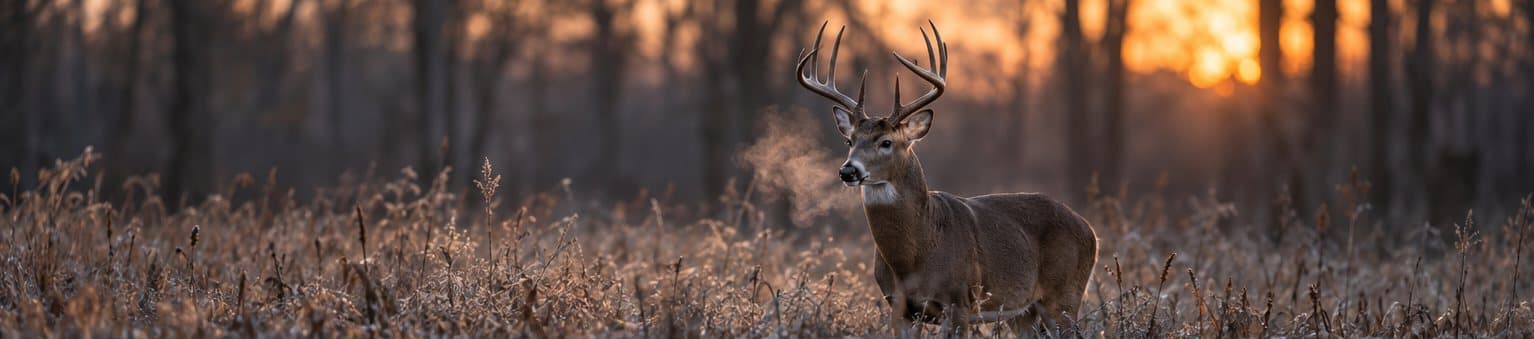
Rut Science
Alabama's Rut Runs Late. Here's Why.
Daylight sets the clock. Old stocking trucks set the calendar. In Alabama that means you can chase the rut in November, again in December, and again in January without ever leaving the state.
Every fall somebody on an out of state hunting podcast says the magic words: “second week of November, boys.” And every fall a bunch of Alabama hunters burn their best vacation days sitting in a quiet woods wondering what they did wrong.
You did not do anything wrong. You just hunt in a state where the rut does not read the same calendar as Illinois.
We dug through the Alabama Department of Conservation and Natural Resources fetal aging work, state agency rut data from across the Southeast, and the deer biology literature on breeding season timing. The short version: Alabama’s breeding season is spread across roughly three months, it is remarkably consistent year to year, and the reason has almost nothing to do with the weather you are watching on your phone.
In Illinois, the whole state ruts at once. In Alabama, you can hunt a peak rut in November, another in December, and another in January.
01 / The Clock
It's Daylight, Not Weather
Whitetail breeding is driven by photoperiod, which is a fancy way of saying day length. As fall days get shorter, melatonin levels change, that kicks the hypothalamus and pituitary into gear, does start cycling on roughly 28 day intervals, and bucks get a testosterone surge that turns them into the idiots we all love to hunt.
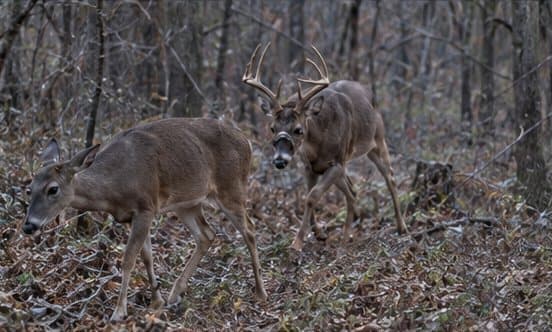
Here is the part that matters for us: the amount of daylight on any given date is the same every single year. It does not care if we had a hot October or a wet one. That is why peak breeding dates repeat year after year with very little drift, and why the guys who keep good records can set their watch by it.
Latitude is what shifts the whole thing south. Lower latitudes hold onto longer days further into the fall, so that short day trigger arrives later the farther south you go. A herd up in Michigan hits it in late October and early November. A herd down in the Alabama coastal plain does not get there until late December or January. Run the numbers on peak breeding date against latitude across the whitetail’s range and the trend is strong and obvious.
02 / The Patchwork
Blame the Restocking Trucks
Daylight explains why the South ruts later than the North. It does not explain why your buddy forty five minutes away is seeing chases three weeks before you are. For that, you have to go back about a hundred years.
Alabama’s deer herd was nearly wiped out by the early 1900s. The restocking effort that followed brought deer in from a long list of places, including Arkansas, Georgia, Michigan, North Carolina, Ohio, Texas, and Wisconsin. Those transplanted deer kept their ancestral breeding schedule, and so did their descendants. State biologists have documented this for decades through fetal aging surveys, which is exactly why Alabama’s rut map is built county by county instead of as one statewide date.
So a property that straddles two old stocking lines can genuinely have two different ruts on it. Deer with Midwest heritage firing off in November, deer with South Alabama heritage not touching it until the new year, same dirt.
Each local herd is running its own internal calendar, and it was set before your granddad was born.
03 / The Map
When It Fires Where You Hunt
Rough windows based on state agency breeding data. Treat these as a starting point, then let your own scouting dial it in, because county level timing varies and the lines are not clean.
| Region | Typical peak breeding |
|---|---|
| North Alabama | Mid to late November |
| Central / Black Belt | Late December into mid January |
| Southwest Alabama | Mid to late January, some counties into February |
| Mississippi | Early December in the northwest, January in the central and southeast |
| Georgia | Varies widely by locale, generally late fall into winter |
| Louisiana | Late October in parts of the southwest, November into January elsewhere |
| South Carolina | Late October into the first week of November |
| North Carolina | Around mid November statewide |
| Florida | The wildest spread in the country, from summer in the far south to February in the panhandle |
Sources: state wildlife agency breeding and fetal aging data, summarized. Alabama county level timing is published on the ADCNR rut map.
04 / The Myths
What Moves It and What Doesn't
Shifts things at the edges
- Age structure. Doe fawns that breed their first year tend to cycle later than mature does, which stretches the tail end of the season.
- Nutrition. Poor soils and thin does can push conception later and spread it out.
- Herd density. Affects how tight or ragged the window looks, not when it opens.
- Cold fronts. Change what you see in daylight, inside a window that was already open.
Does not move the calendar
- A warm fall. Deer are not waiting on a thermometer. Warm weather hides rut activity, it does not delay it.
- A big acorn year. Mast changes body condition and fawn survival. No published work ties it to a shift in peak breeding dates.
- Hunting pressure. Skews age structure younger. Does not override the daylight cue.
- Your feed. It will bring deer. It will not flip the switch early.
That last point is worth sitting with. Even in a banner mast year with perfect weather, those does are not cycling until day length says go. The variables above decide which does breed early or late. Daylight decides when the whole thing can start.
05 / The Plan
How To Actually Hunt It
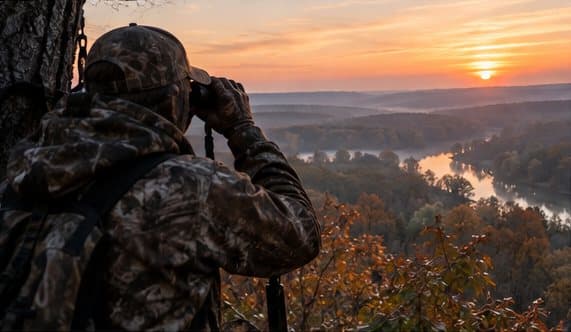
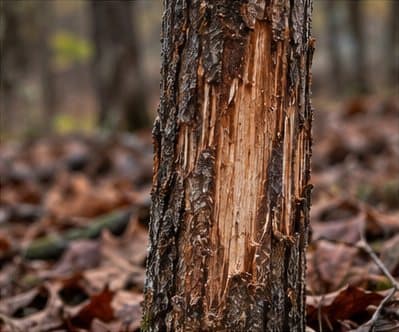
- Throw out the national rut calendarTennessee's peak is not your peak, and neither is the one on that YouTube thumbnail. Hunt your county.
- Move your vacation daysIf you always burn PTO on Thanksgiving week and you hunt central or south Alabama, try the stretch between Christmas and New Year's instead. A lot of folks are shocked the first year they do it.
- Scout lateFresh rubs and opened up scrapes in mid December and January are telling you something real. Keep checking when everybody else has quit looking.
- Sit the does during peakWhen the chasing seems to disappear, that is often lockdown. Get on doe bedding and food instead of the travel corridors that were hot a week earlier.
- Stack your frontsOnce your window is open, a sharp temperature drop is your best daylight movement bet. Before the window opens, it buys you much less.
- Keep recordsTwo or three seasons of your own dated sightings and sign beat every rut forecast ever printed. Your property has a pattern. Write it down and you will find it.
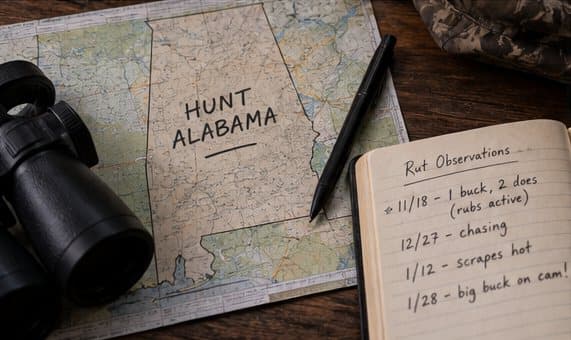
Log It. Learn It. Repeat It.
Hunting Club saves the date, the weather, the sightings, and the sign for every sit, so next season you are not guessing at your own rut window. Compare this December to last December and let your own woods tell you when it fires.
Tell us what you’re seeing
Did you tag one in November or are you still waiting on January? What is your property doing right now? Post your rut reports, sign photos, and dates in the Hunting Club feed and let’s compare notes across the state. The more of us tracking it, the sharper our maps get.
Good luck this season and be safe out there.
About this post: Compiled from Alabama Department of Conservation and Natural Resources Wildlife and Freshwater Fisheries breeding and fetal aging data, state wildlife agency rut summaries from across the Southeast, and published research on whitetail reproduction. Regional windows are generalized. Always confirm current season dates and zone boundaries with your state agency before planning a hunt.